Re: Messerschmitt bf109 G10
Posted: Sat Aug 01, 2026 7:33 pm
An "Oberleutnant" in turmoil.
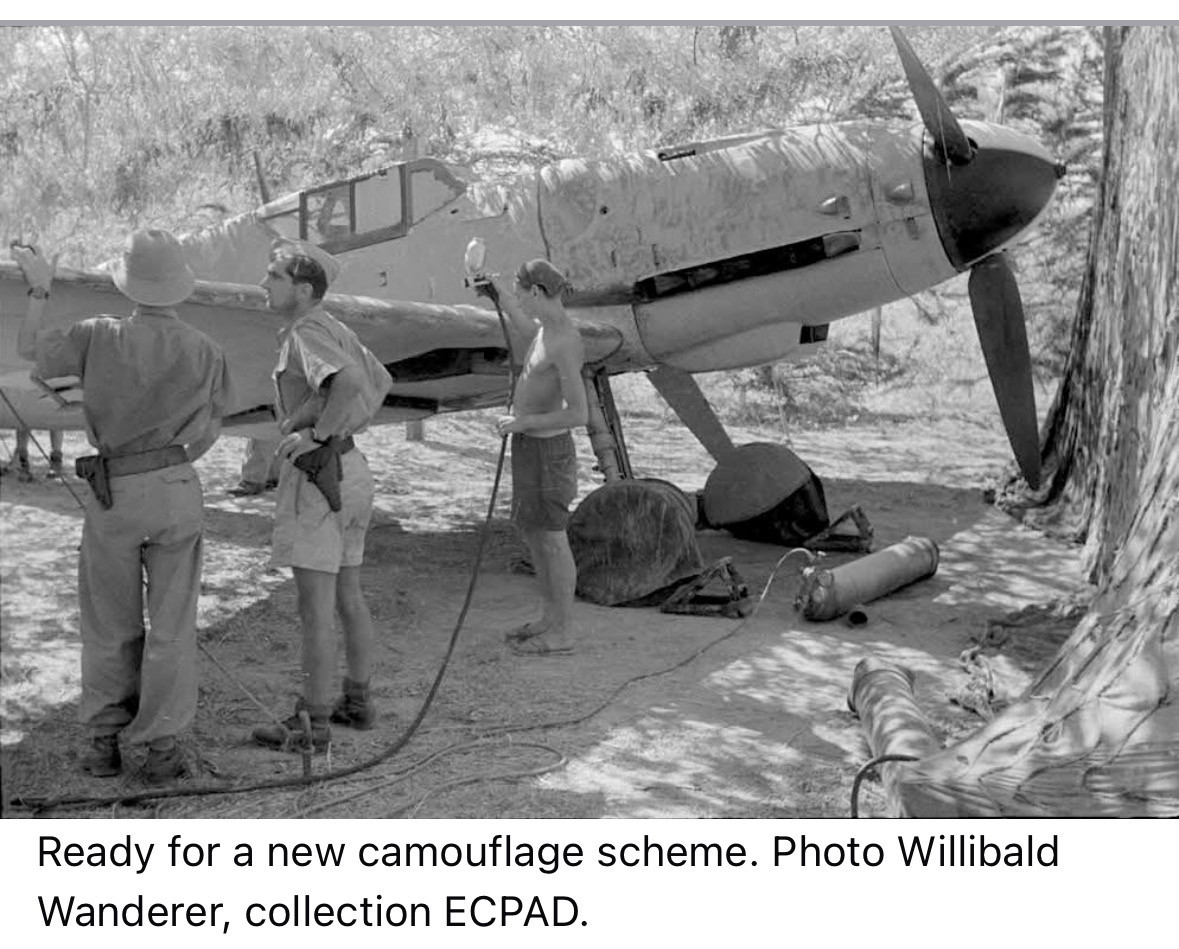
The squadrons equipped with different models of the last subtypes of 109 Gustav had for mission to perform rapid reconnaissance operations at high altitude over the battlefield, out of range of Allied fighters.
Powered by the most recent and often improved versions of the DB 605 engine, and generally unarmed, these reconnaissance Gustav – equipped with camera modules RB 12.5/7 or RB 32/7 before the appearance of the dedicated reconnaissance version G-8 – were deployed to the most dangerous areas of the European theater of operations.
One of these units was I./NAG 12, established at Herzogenaurach in southern Germany in the spring of 1943. The fifteen aircraft of the 2nd Squadron of this unit were deployed in the Balkans in autumn 1943 and initially based on the field of Berat (southwest of Tirana).
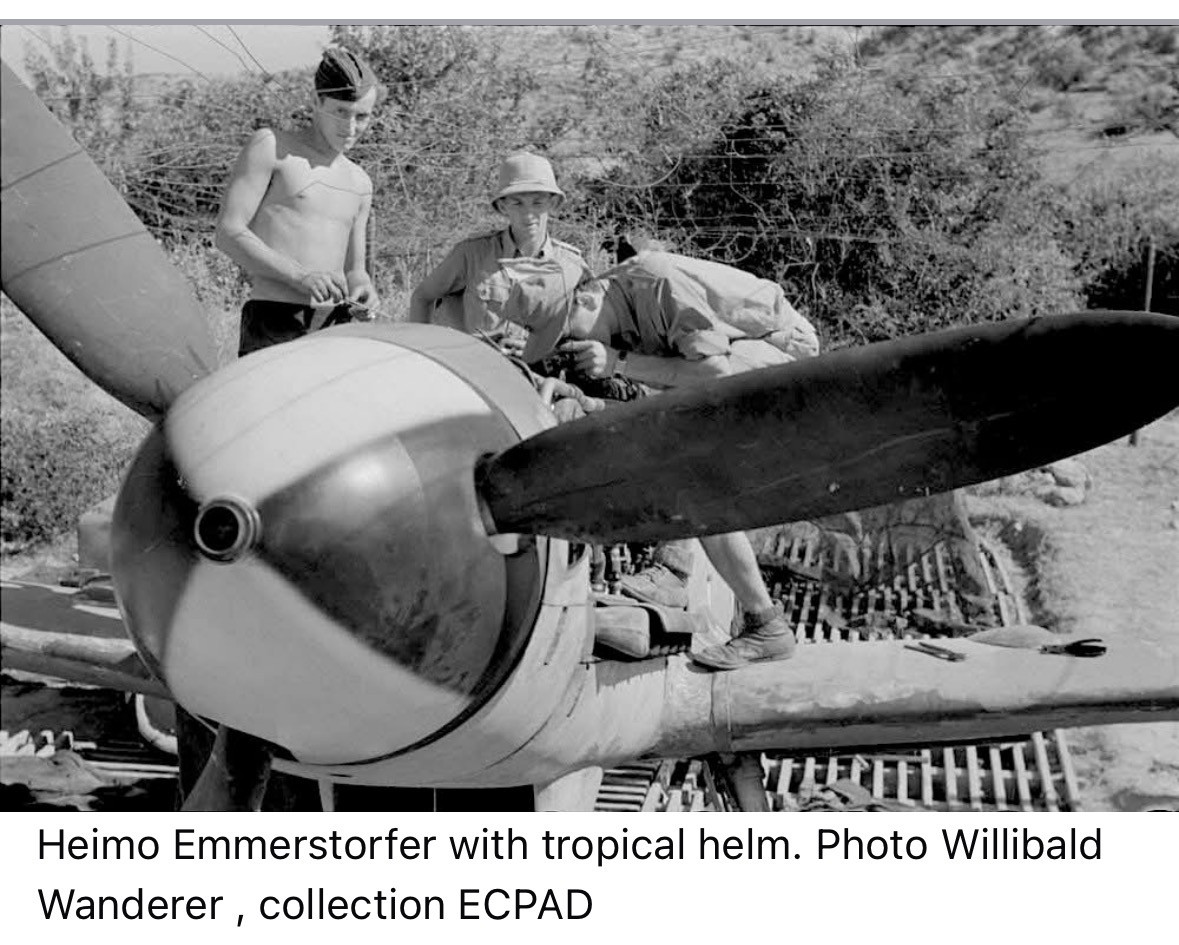
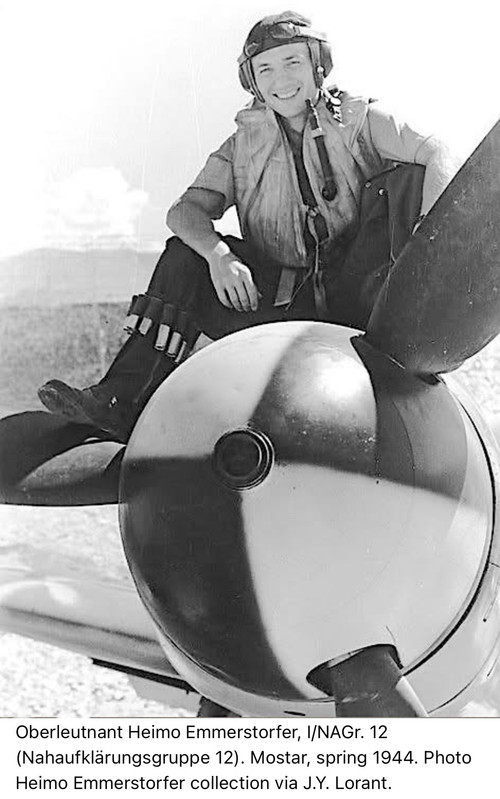
Heimo Emmerstorfer, was one of the known pilots and survivors of I. Gruppe NAG 12. He spent three weeks on reconnaissance missions with the 2nd Escadrille in spring 1944.
Emmerstorfer’s flight log reveals that as a reconnaissance pilot, he flew 217 combat missions, totaling 1,134 flight hours. In addition to the Iron Cross 1st and 2nd class, he was decorated with the Luftwaffe Honorary Cup, the Pilot’s Reconnaissance and Combat Clasp in gold, the Wounded' Badge in black and the German Cross in gold.
In late 1944 and early 1945, the sixteen Bf 109s of 2./NAG 12 were deployed to Hungary and made constant sorties from Tapolca, while the Soviets completed the encirclement of Budapest, threatening the last oilfields of the Reich in southern Hungary. This huge battle of Kesseltempête (literally "Battle of the Cauldron") lasted about six weeks and the Aufcoroner reconnaissance Messerschmitt Bf 109 were engaged almost constantly in the fighting. By May 1945, the squadron had flown some 2,000 sorties. Emmerstorfer himself made his last flight aboard a Bf 109 on 9 May 1945, the day after the end of World War II. Determined to avoid capture by the Soviets, he took off from Ziri, west of Ljubljana, just before the Russians who were occupying the ground that evening. He flew west, towards Austria, and reached his hometown of Hörsching without incident. However, facing the American columns on the roads, he decided to continue his journey westward. Finally, at 7:35 p.m., he landed on his stomach in Haibach, on the Danube, and walked to his parents' house.
The squadrons equipped with different models of the last subtypes of 109 Gustav had for mission to perform rapid reconnaissance operations at high altitude over the battlefield, out of range of Allied fighters.
Powered by the most recent and often improved versions of the DB 605 engine, and generally unarmed, these reconnaissance Gustav – equipped with camera modules RB 12.5/7 or RB 32/7 before the appearance of the dedicated reconnaissance version G-8 – were deployed to the most dangerous areas of the European theater of operations.
One of these units was I./NAG 12, established at Herzogenaurach in southern Germany in the spring of 1943. The fifteen aircraft of the 2nd Squadron of this unit were deployed in the Balkans in autumn 1943 and initially based on the field of Berat (southwest of Tirana).
Heimo Emmerstorfer, was one of the known pilots and survivors of I. Gruppe NAG 12. He spent three weeks on reconnaissance missions with the 2nd Escadrille in spring 1944.
Emmerstorfer’s flight log reveals that as a reconnaissance pilot, he flew 217 combat missions, totaling 1,134 flight hours. In addition to the Iron Cross 1st and 2nd class, he was decorated with the Luftwaffe Honorary Cup, the Pilot’s Reconnaissance and Combat Clasp in gold, the Wounded' Badge in black and the German Cross in gold.
In late 1944 and early 1945, the sixteen Bf 109s of 2./NAG 12 were deployed to Hungary and made constant sorties from Tapolca, while the Soviets completed the encirclement of Budapest, threatening the last oilfields of the Reich in southern Hungary. This huge battle of Kesseltempête (literally "Battle of the Cauldron") lasted about six weeks and the Aufcoroner reconnaissance Messerschmitt Bf 109 were engaged almost constantly in the fighting. By May 1945, the squadron had flown some 2,000 sorties. Emmerstorfer himself made his last flight aboard a Bf 109 on 9 May 1945, the day after the end of World War II. Determined to avoid capture by the Soviets, he took off from Ziri, west of Ljubljana, just before the Russians who were occupying the ground that evening. He flew west, towards Austria, and reached his hometown of Hörsching without incident. However, facing the American columns on the roads, he decided to continue his journey westward. Finally, at 7:35 p.m., he landed on his stomach in Haibach, on the Danube, and walked to his parents' house.